
How a Water Hand Pump Works in Pakistan: What Your £85 Sponsorship Builds
18 August 2026
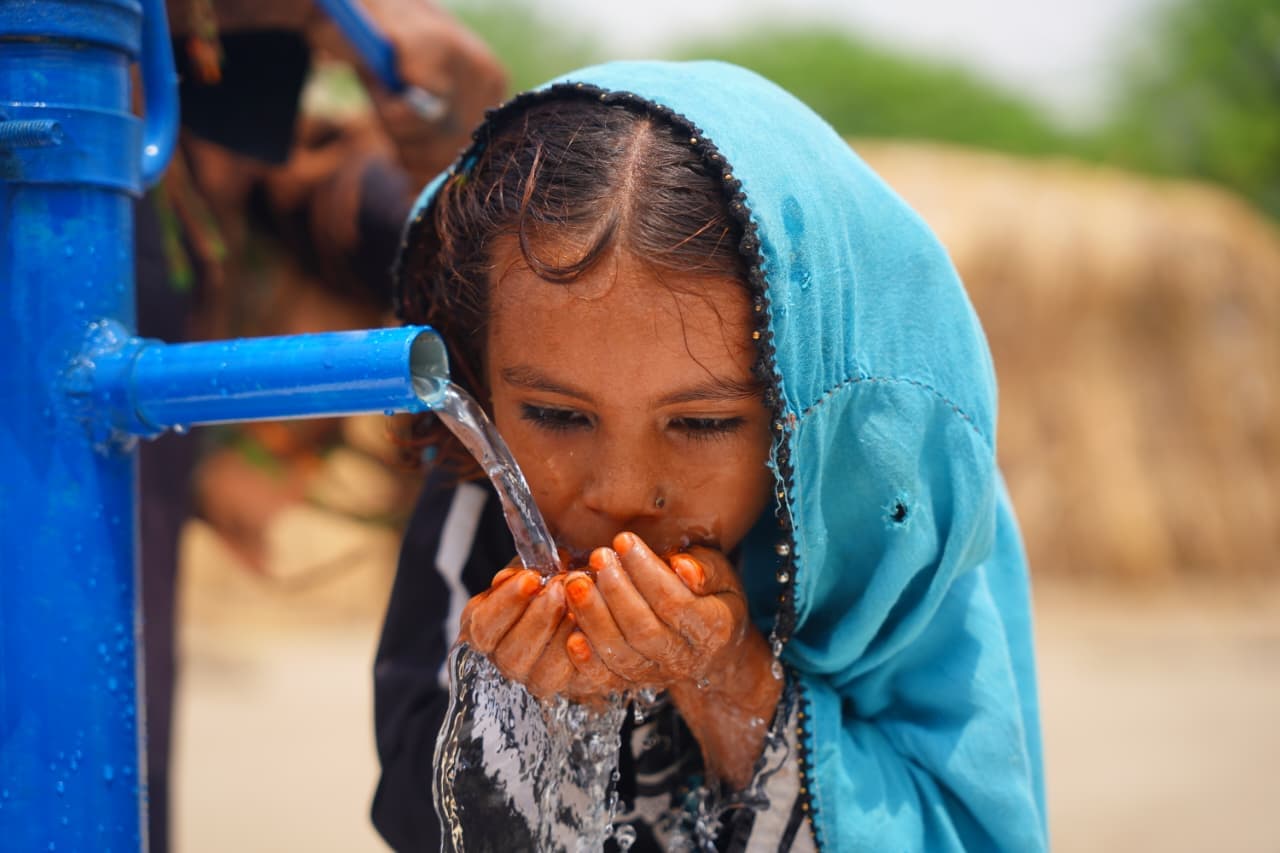
For many families in rural Pakistan, water may exist beneath the ground, yet reaching a reliable source can still be a daily challenge.
The problem is not simply about finding water. It is about access, reliability and water quality.
Families without a nearby water point may depend on canals, ponds, shallow wells or other sources that are exposed to contamination. Others may have to travel to collect water several times a day.
Pakistan relies heavily on groundwater, particularly across the Indus Basin. However, groundwater conditions vary considerably between locations. Water levels can rise and fall with the seasons, while quality can also vary because of natural minerals, salinity and contamination.
That is why installing a water hand pump is more than simply putting a pump into the ground.
A responsible installation begins with understanding the location.
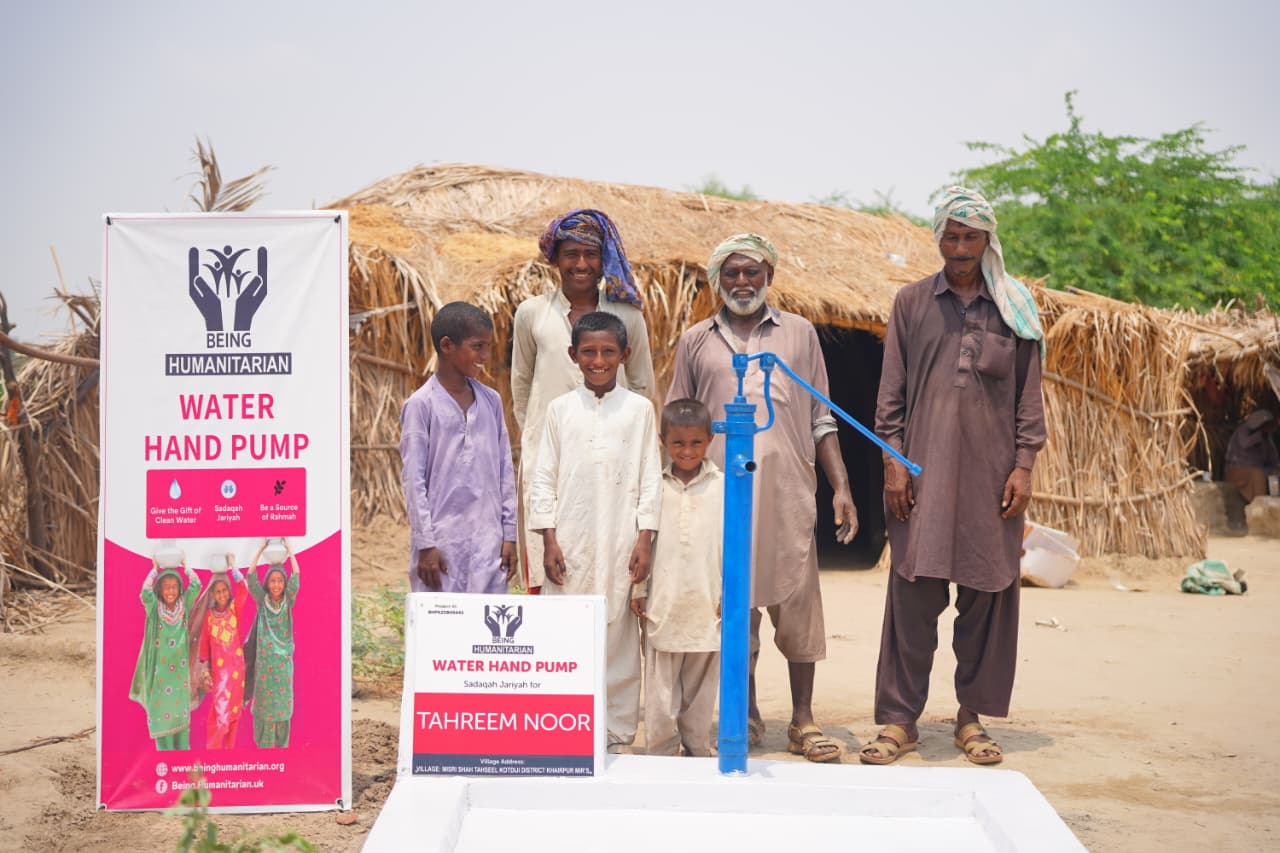
What is a water hand pump?
The part of a hand pump that you see above the ground is only a small part of the system.
Below it is a borehole that provides access to groundwater.
Depending on local ground conditions, a typical borehole-fed hand pump system can include:
a drilled borehole reaching a suitable water-bearing layer
casing to support and protect the borehole
a screened section that allows groundwater to enter
a hand-operated pumping mechanism
a concrete platform around the pump
drainage that carries spilled water away from the wellhead
Together, these components create a protected point from which groundwater can be brought to the surface without electricity or fuel.
The exact construction and depth should depend on the conditions at each site rather than applying one standard depth everywhere.
Why does borehole depth matter?
Groundwater does not remain at exactly the same level throughout the year.
Water levels can change between wet and dry seasons. Long-term groundwater abstraction can also cause levels to decline in some areas. The World Bank has documented groundwater depletion and other groundwater-management challenges within Pakistan's Indus Basin.
This means reaching water during drilling is not enough on its own.
The location, depth and type of pump need to take local conditions into account so that the source has the best chance of remaining functional when groundwater levels fluctuate.
This is also why Being Humanitarian does not describe every hand pump as being drilled to one fixed depth. Ground conditions differ from one community to another.
Suction pumps and deeper hand pumps
Not all hand pumps work in exactly the same way.
A common shallow hand pump uses suction. When the handle is operated, changes in pressure allow water to rise through the pipe.
But suction has a physical limit.
In practical conditions, suction pumps are generally suitable only where the water level is relatively close to the surface. WHO technical guidance on rural water technologies recognises this limitation.
Where groundwater lies deeper, a different pumping arrangement may be needed, with the working cylinder positioned lower inside the borehole.
The important point is simple:
The pump should be selected for the water conditions of the site, rather than forcing the same solution onto every location.
A borehole alone does not guarantee safe drinking water
This is an important distinction.
Groundwater is naturally protected from some of the contamination that can affect exposed surface water, but that does not mean every groundwater source is automatically safe to drink.
Pakistan faces both microbiological and chemical water-quality challenges. The Pakistan Council of Research in Water Resources has reported significant levels of unsafe drinking-water sources, while WHO identifies Pakistan among countries where naturally occurring arsenic can occur in groundwater.
For that reason, responsible water provision should consider more than whether a borehole produces water.
Location, surrounding sanitation conditions, groundwater characteristics and appropriate water-quality precautions all matter.
This is one reason we prefer to talk about responsible access to groundwater, rather than suggesting that simply drilling a hole automatically creates safe drinking water.
Why the concrete platform matters
The concrete around a hand pump may look like the simplest part of the project, but it performs an important job.
Every time a pump is used, some water is spilled.
If that water collects immediately around the borehole, it can create muddy standing water and increase the possibility of contaminated surface water travelling back towards the source.
A properly constructed platform is therefore designed to slope away from the pump.
Drainage then carries excess water away from the wellhead.
Small construction details such as these can make an important difference to how hygienically and reliably a water point operates.
What makes a hand pump a sustainable water solution?
Emergency water distribution can be essential during floods, displacement and other crises.
But where a community needs long-term access to groundwater, continuously delivering bottled or tankered water does not address the underlying problem.
A hand pump takes a different approach.
Instead of repeatedly transporting water to people, it creates a local means of accessing an existing groundwater resource.
No electricity is required
A manual hand pump does not depend on the electricity grid.
There is no monthly electricity bill and no fuel is required every time water is needed.
The energy comes from operating the handle.
Maintenance can remain simple
The long-term value of a water system depends partly on whether it can actually be repaired.
Using commonly available components and familiar pump technology can make routine maintenance easier and reduce dependence on specialist equipment.
Responsibility stays close to the water point
Sustainability is not only about engineering.
A water point also needs people who understand who is responsible for keeping the area clean, identifying problems and arranging minor repairs when required.
A well-built pump combined with local responsibility has a much stronger chance of continuing to serve people after installation.
Water access also gives people back their time
The impact of bringing water closer to a household is not measured only in litres.
When water is not available close to home, somebody has to collect it.
Globally, evidence from the WHO/UNICEF Joint Monitoring Programme shows that this burden falls disproportionately on women and girls in households where water has to be collected away from the home.
A nearby water point can therefore mean fewer journeys carrying water and more time available for school, family responsibilities, livelihoods and rest.
There is also something less measurable but equally important: dignity.
Having water available nearby means a family can drink, cook, wash and welcome guests without organising much of the day around collecting water.
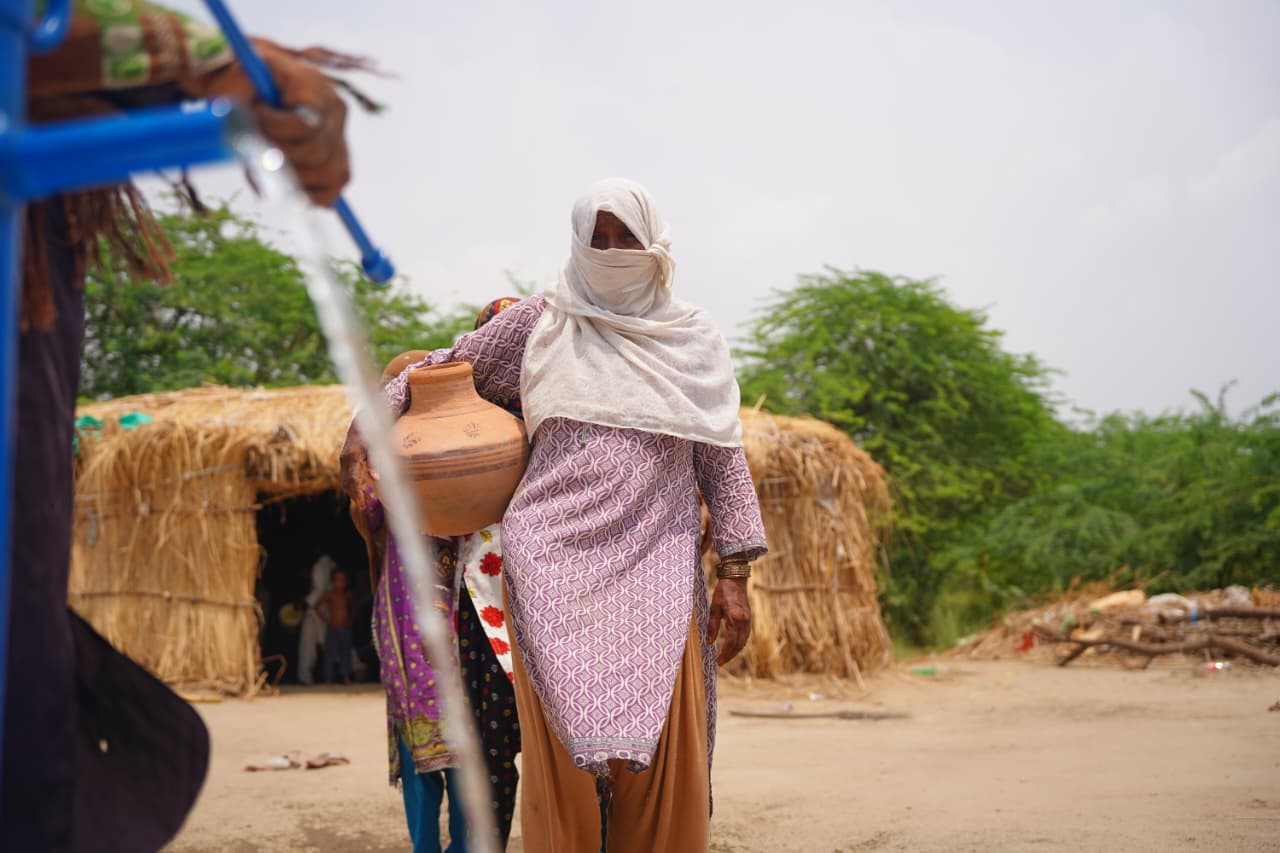
So what does £85 actually mean?
A complete Being Humanitarian Water Hand Pump sponsorship is £85.
That price may appear lower than many water appeals you have seen.
Our aim is to deliver these projects through an efficient local implementation model in Pakistan, keeping the cost of a complete hand pump accessible to donors while focusing funding on the installation itself.
The exact technical specification can vary according to the location because groundwater depth and ground conditions are not identical everywhere.
Your £85 therefore does not mean that every pump is drilled to precisely the same depth or constructed using an identical technical specification.
It means funding one complete hand pump project appropriate to its selected location.
Sponsors can also receive completion evidence relating to their project, which can include photographs, a personalised plaque, location information and project reporting, with video evidence where available.
This allows donors to see the project they helped make possible.
A gift that can continue giving
Water has a special place in Islamic charitable tradition.
For many Muslims, providing a lasting water source is also an opportunity to give Sadaqah Jariyah, a form of charity intended to continue benefiting others beyond the moment in which the donation is made.
A hand pump can be sponsored in your own name.
It can be dedicated to your parents.
It can be given on behalf of your family.
Or it can be dedicated in memory of someone who has passed away.
We do not make promises about spiritual reward. That belongs to Allah alone.
What we can show is the physical benefit your donation creates: a water point installed in a community and intended to continue serving people beyond the day it is completed.
Every time the handle is used, the project has another opportunity to benefit someone.
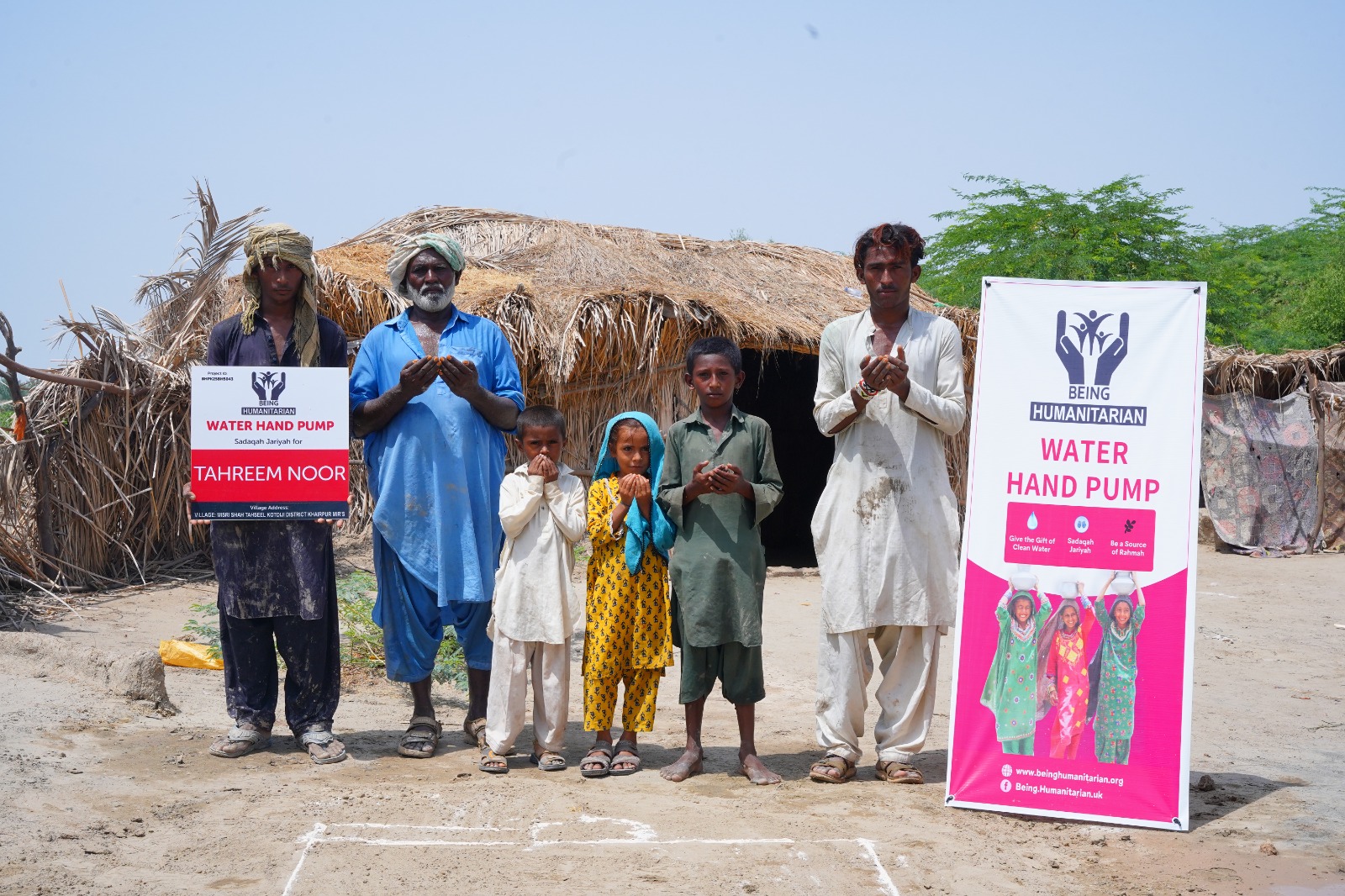
Sponsor a Water Hand Pump in Pakistan for £85
One donation can create more than a temporary delivery of water.
It can help create a local water point that people can return to, day after day.
Full Water Hand Pump Sponsorship: £85
Your sponsorship can include:
One complete water hand pump project
Personalised dedication plaque
Project photographs
Installation location
Completion evidence and reporting
Video where available
Whether you give it as Sadaqah, Sadaqah Jariyah, in your own name or in memory of someone you love, your donation can help turn groundwater beneath a community into water that people can actually reach.
Being Humanitarian is a UK registered charity, No. 1157582.